
Science & TheologyInterdisciplinary explorations · Psychology
Lecture notes (Chinese)
An exploration of being human

Science & Theology lecture series — a psychological perspective

See yourselfSee the worldSee others.

From personality to situations, from self to others.
Seeing everyday life anew through the lens of psychology.

Begin the exploration 60 minutes · No background in psychology needed
A watercolour landscape: a traveller sits quietly by a lake while, in the distance, people cross a stone bridge.
Look inward, understand outward.SELF · WORLD · OTHERS
With curiosity, open three windows onto understanding peopleSCROLL TO EXPLORE ↓

Start here · 00—10 MIN

First, what is psychology?

Before we turn to ourselves,
let’s look at a map of the discipline.

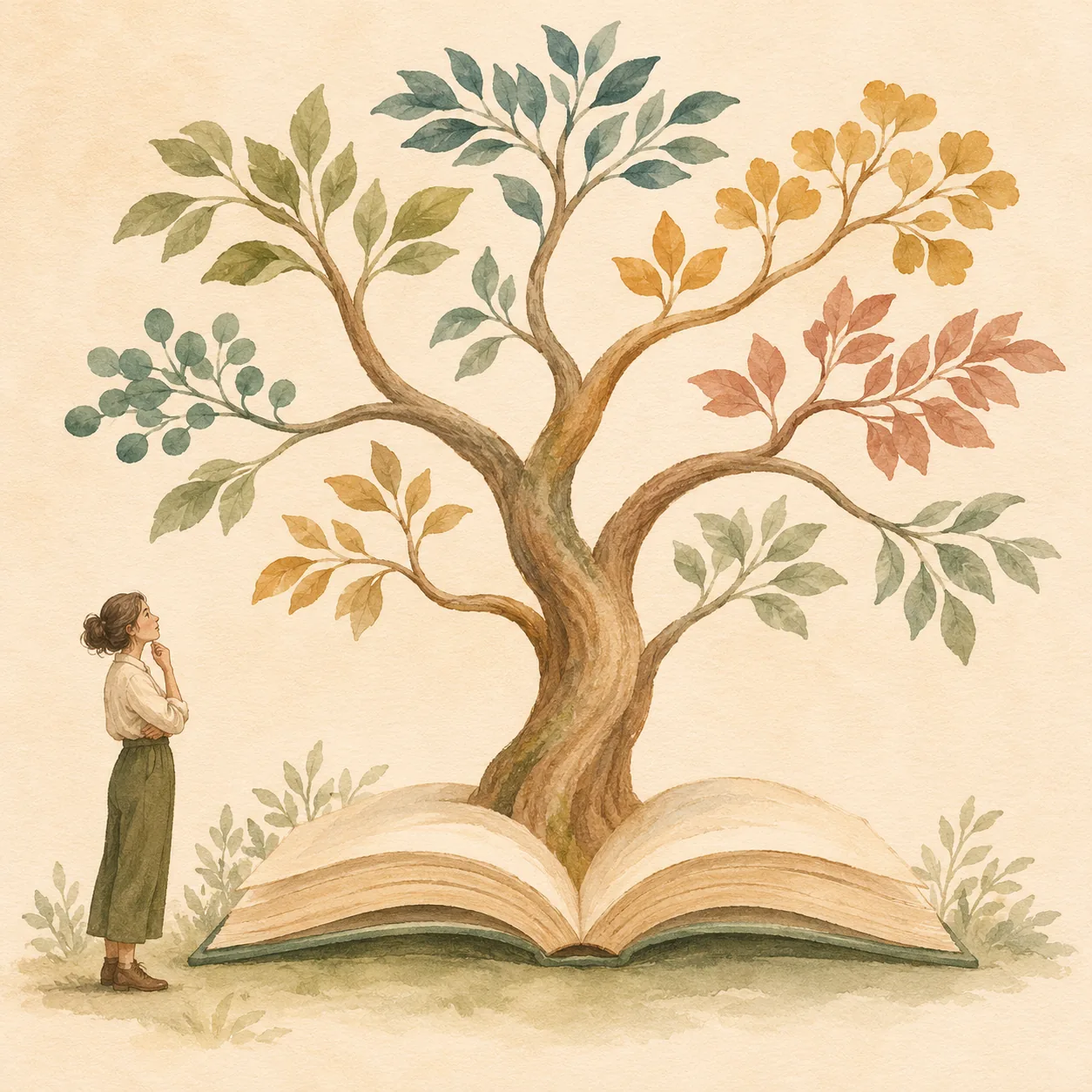
A great tree with many different branches grows out of an open book, standing for the branches of psychology.01

A map of the field · 3 MIN

What are the branches of psychology?

It studies cognition and emotion, and also personality, development, social relationships, and working life.

Show a short overview

Basic fields: cognitive, developmental, biological and neuropsychology, personality, social, and cross-cultural psychology.

Applied fields: clinical and counselling, educational, industrial and organisational, and health psychology, as well as human–computer interaction.

Research methods and statistics run through every field; positive psychology looks at well-being, meaning, and human strengths.


Connected archways: on one side, chairs for a conversation; on the other, a research desk.02

Understanding patterns, responding to people · 3 MIN

How do counselling and
psychological research relate?

Research looks for general patterns of the mind; counselling attends to a particular person. Through evidence and practice, each strengthens the other.

Show a short overview

Research proposes and tests explanations through questionnaires, experiments, and observing behaviour.

Counselling makes sense of difficulties within a professional relationship, combining research evidence, professional experience, and the client’s needs.

A PhD in psychology and a licence to practise counselling are different training paths. This lecture takes the research perspective.

In a garden, people on different paths walk towards an open clearing, standing for the many paths to understanding and help.03

Different paths to understanding and change · 4 MIN

What are the main schools
of counselling?

How different approaches make sense of people’s difficulties, and what each of them focuses on.

Show a short overview

Cognitive-behavioural: how thoughts, emotions, and behaviour interact. Psychodynamic: recurring patterns in experience and relationships.

Humanistic and existential: acceptance, free choice, and meaning. Systemic and family: patterns of interaction and networks of relationships.

In practice, approaches are often combined; each school, each specific method, and the problems it suits deserve to be looked at on their own.

A one-hour route

From the inside out, seeing more.

With personality and situations as our thread,
we connect your experience with psychological research.

10—2515 minChapter 1 · Personality and motivationSee yourself: What kind of person am I?

The Big Five and HEXACO; the MBTI, Jung’s eight cognitive functions, and self-exploration; the Dark Triad as personality traits. Combining self-reports, reports from others, and everyday behaviour to understand what measurement means.

From Maslow’s theory of needs to the needs for autonomy, competence, and relatedness in self-determination theory.

Think about it: are you the same person when you are alone, with friends, and at work?
25—3712 minChapter 2 · Situations, culture, and organisationsSee the world: How does my environment shape me?

How do personality and situations shape behaviour together? From situational strength and trait activation to the environments we actively choose and shape.

Cross-cultural psychology: individualism and collectivism, and the differences within a culture. Organisational psychology: personality and ability assessment, person–job fit, and 360-degree feedback.

Think about it: which environments make it easier for you to be your true self?
37—4811 minChapter 3 · Social influence and prosocial behaviourSee others: How does caring become action?

Revisiting Asch’s conformity studies, Milgram’s obedience studies, and the bystander effect; using the Stanford Prison Experiment to discuss research evidence and methodological controversy.

Understanding cooperation through the prisoner’s dilemma, and responsibility, risk, and helping through bystander situations; and seeing how group interaction affects creativity.

Think about it: when helping comes at a cost, what would make you take the first step?
48—557 minA window on methods · Research and new technologyHow do we know all this?

Questionnaires and experiments, economic decision games, diaries and experience sampling, longitudinal studies: different methods answer different questions.

Understanding correlation and causation, effect sizes, and uncertainty. A look into VR behavioural research and human–computer interaction: how do immersion, AI-generated scenarios, and real-world behaviour relate?

Think about it: can “I say I would help” and “I actually helped” be measured in the same way?
55—605 minDiscussion and looking backBack to life, with better questions.

Bringing psychological mechanisms, lived experience, and reflection on values into one conversation: once we understand what drives behaviour, how do we think about choice, responsibility, and kindness?

Take one observation home: something you have discovered about yourself, a situation you would like to change, or an action you are willing to try.

Scientific inquiry · Humanistic care

“Know yourself, and understand the situation;
see the differences, and see the connections.”

Research answers the questions that can be tested,
while we keep room for a serious conversation about experience, meaning, and faith.

ABOUT THE SPEAKER

Ranran Li

PhD in Psychology · Humboldt Research Fellow

Postdoctoral researcher at the Max Planck Institute for the Study of Crime, Security and Law in Germany, working on how personality and situations interact, on prosocial and moral behaviour, and on the use of virtual reality in the behavioural sciences.

Personality & situationsProsocial behaviour under riskVR & generative immersion
Visit the speaker’s website ↗
Further reading and measurement resources

Personality measures help us understand differences between people; they are not clinical diagnoses. This course is an introduction to psychology for a general audience. The illustrations are AI-generated concept art.